
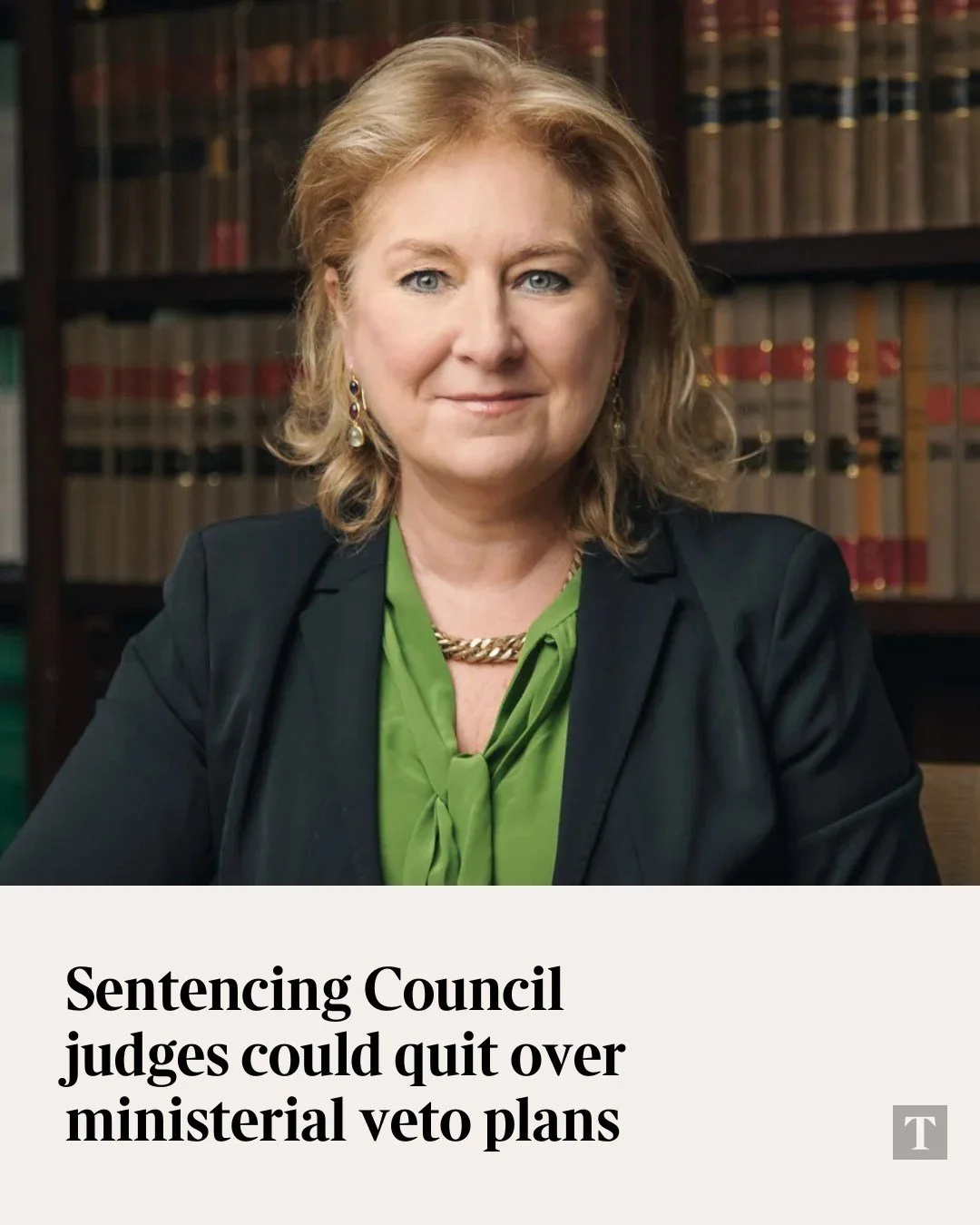
Sentencing Council judges could quit en masse if plans to increase ministerial control over guidance to courts go ahead, the head of the judiciary has warned.
Baroness Carr of Walton-on-the-Hill, the lady chief justice, told The Times that fears over the undermining of judicial independence could prompt members of the quango to stand down.
Tensions between the UK government and the judiciary are escalating amid proposals to give ministers a formal role in approving sentencing guidance issued to courts. The head of the judiciary has warned that these changes could have serious consequences for the independence of the legal system and may prompt resignations from those involved in setting judicial guidance.
Baroness Carr of Walton-on-the-Hill, the Lady Chief Justice and president of the Sentencing Council, has raised concerns that proposed changes to the law risk blurring the constitutional separation between the executive and the judiciary. Under current arrangements, the Sentencing Council operates as an independent body responsible for developing guidance to support consistent sentencing decisions. Plans to introduce ministerial oversight would alter that balance.
The proposed changes form part of the Sentencing Bill 2025, which would give the Justice Secretary the power to approve or block sentencing guidelines before they take effect. While the Lady Chief Justice would remain involved in the approval process, the inclusion of a ministerial veto represents a significant shift in how sentencing policy is governed.
These proposals follow controversy earlier in the year after the Sentencing Council issued guidance suggesting that judges take into account an offender’s cultural, religious and ethnic background when considering whether to impose custodial or community-based sentences. Critics argued the guidance risked unequal treatment before the law. Political figures on the opposition benches described the approach as creating a “two-tier” justice system, and the government moved quickly to prevent the guidance from being implemented.
Although the Justice Secretary at the time acknowledged that the council had exceeded its remit, the judiciary has expressed concern that the legislative response goes further than addressing a single piece of guidance. There are fears that formal ministerial control over sentencing frameworks could undermine judicial independence and set a precedent for political involvement in court decision-making.
As president of the Sentencing Council, Baroness Carr appoints its judicial members and has indicated that the proposed reforms could place judges in an untenable position. While stopping short of issuing ultimatums, she has suggested that some members may feel unable to continue serving on the council if political oversight becomes entrenched. Such departures would weaken the council’s ability to function and could trigger a broader constitutional dispute over the separation of powers.
The situation highlights a growing strain between efforts to assert democratic oversight of sentencing policy and the long-standing principle that courts must remain independent of political influence. How this tension is resolved will have significant implications for the future balance between government authority and judicial autonomy in the UK justice system.
Adapted from reporting in The Times, December 2025