
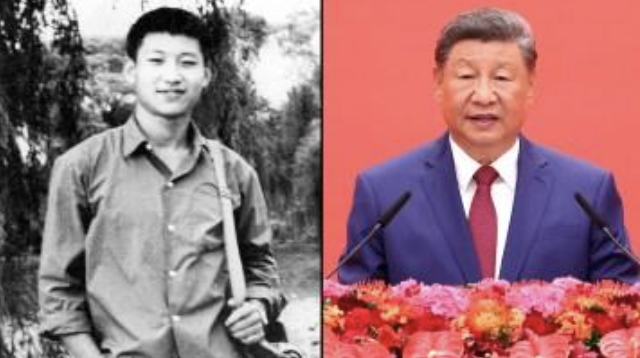
In a rare glimpse into his inner life, China’s President Xi Jinping shared in a January speech that a little-known Irish novel helped him endure the hardships of his teenage years during the Cultural Revolution. Exiled to the countryside at just 13 years old after his father was purged from the Communist Party, Xi lived in harsh conditions, including time spent alone in a cave. During that period, he turned to literature for comfort and meaning — in particular, a novel called The Gadfly, whose themes of sacrifice, endurance and conviction left a lasting impression.
First published in 1897, The Gadfly was written by Ethel Voynich, an Irish-born writer, musician and political activist. While the book has long faded into obscurity in much of the English-speaking world, it became extraordinarily popular elsewhere. During the Cold War, it circulated widely across the Soviet Union, selling millions of copies in translation. In China, its influence ran even deeper, resonating with young people navigating political upheaval and revolutionary fervour.
The story follows Arthur Burton, a young Englishman drawn into radical politics in 19th-century Italy. After personal loss, betrayal and a crisis of faith, Arthur is forced into exile. He later returns under a new identity — “the Gadfly” — as a hardened revolutionary figure. Central to the story is Arthur’s relationship with Montanelli, a Catholic cleric who is secretly his father. Their ideological divide ultimately proves irreconcilable, culminating in Arthur’s execution and Montanelli’s moral collapse. The novel blends revolutionary idealism with powerful religious symbolism, despite its strong anticlerical tone.
For young readers in China during the Cultural Revolution, the novel’s celebration of youthful defiance and moral conviction carried particular weight. As documentary filmmaker Carma Hinton has observed, the book held a unique place in the imagination of those swept up in the revolutionary movement. Its rhetoric against religious authority and tradition aligned with the Red Guards’ rejection of old institutions, even as its deeper moral themes lingered beneath the surface.
Ironically, as Mao’s cult of personality intensified, the figure of the Gadfly — a rebellious icon willing to challenge authority — became politically inconvenient. The novel was sidelined for fear that its message might be turned against the leadership itself. After Mao’s death, however, the book found renewed readers among those disillusioned by the excesses of the era, once again serving as a mirror for personal and political reflection.
The novel’s influence extended well beyond China. It inspired other revolutionary-era fiction, including Nikolai Ostrovsky’s How the Steel Was Tempered, which itself became a cornerstone of socialist realism. The Gadfly also left its mark on music, theatre and film, with multiple adaptations across Europe and Russia. Even figures such as Bertrand Russell praised its emotional force. Some biographers suggest Voynich drew inspiration from real-life adventurers and spies of her era, adding to the mythic quality of her protagonist.
Although largely forgotten today in the West, The Gadfly endures as a story about conviction, suffering and the search for meaning in the face of power and betrayal. It is not difficult to see how such a narrative might have offered comfort to a young boy facing isolation and hardship. The more intriguing question is how that story resonates with the same man decades later — now one of the most powerful leaders in the world — and whether he sees himself in the rebel who defied authority, or in the authority figure that the rebel ultimately confronted.
Adapted from an article by Benjamin Ramm, The Times, 7 January 2026