
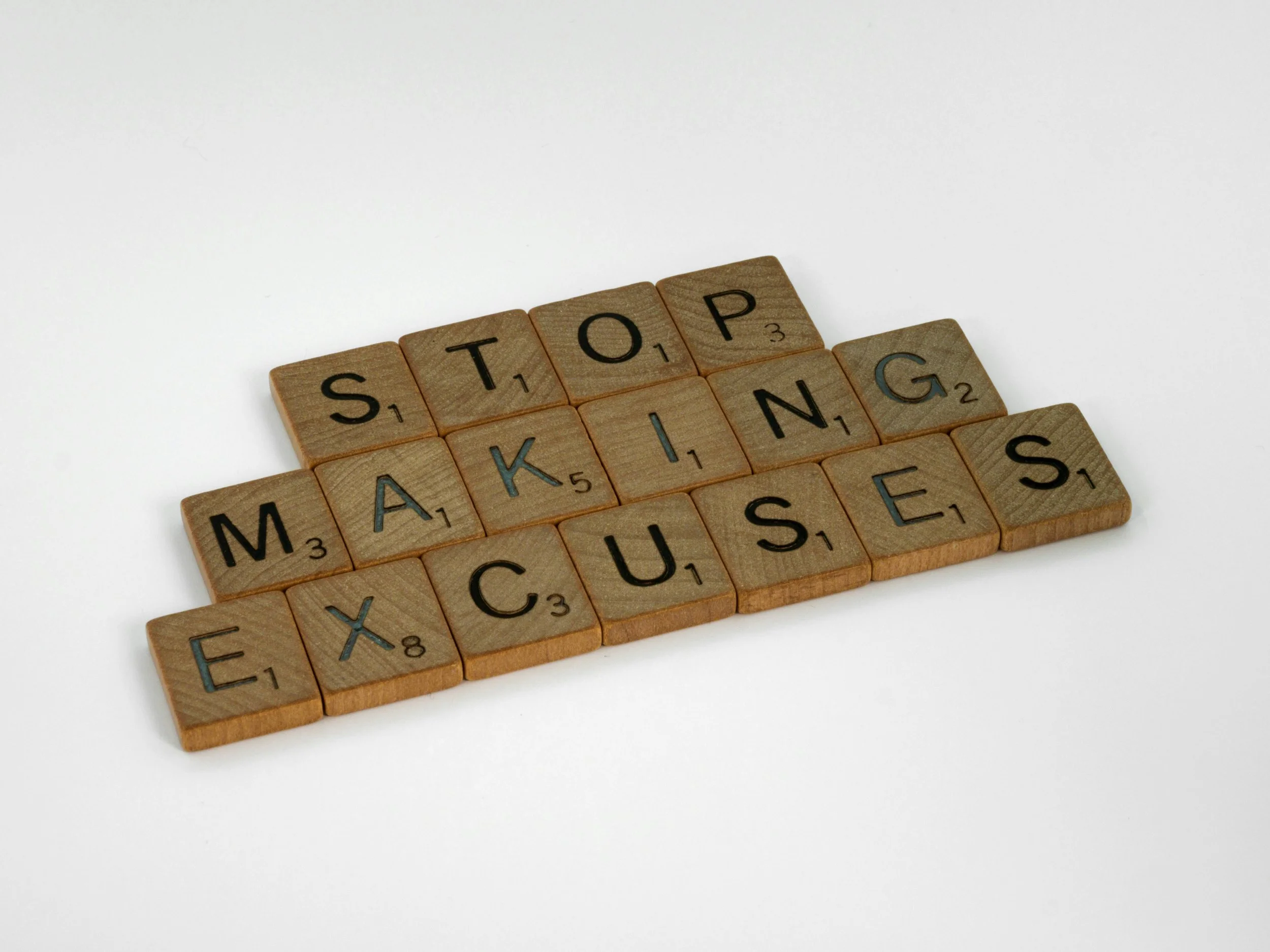
Rather than face uncomfortable conversations and feelings, we make excuses and avoid responsibility. People who make excuses may feel happy in the moment, because they’ve avoided a bit of pain. In the long-term however, they will be less fulfilled and can feel anxious or depressed.
Judges are the experts of hearing excuses; making their own determinations for the health of the Plaintiff, the health of society and even the health of the Defendant. Collectively, you may think you have heard every excuse ever formulated, but let’s give you a test, even one that you may not personally pass.
Excuses
“I just got promoted, and have to concentrate on my job”
Fail — you were promoted in part because you exercised and were fit enough to take the stresses the job entailed. Now you have the promotion and more responsibility, can you afford to be less fit and healthy?
“I did exercise, but I’ve had a health setback recently”
Fail — if you aren’t feeling 100 percent, that’s all the more reason to embark on a rehabilitative graduated exercise programme. Rest, but if you rest too much you risk losing your progress.
“I was exercising, but then I sustained an injury so I had to stop”
Fail — the injured need to exercise more than the uninjured. Ask any rugby player in my teams — the injured trained harder than the fit. Why? Because they were injured and not performing at their maximum, so they needed to be brought up to the optimal level of fitness to match the rest of the team. The injured hate me. Team doing 50 sit ups? The injured ankle player is doing 100. Injured shoulder? Team is doing 100 squats, you’re doing 150. The injured part of the anatomy may be loaded less, but an increased number of repetitions for every other part. Better to show the team that the injured athlete is better than everyone else than to lose their spot on the squad.
“I stayed home because I was injured”
Fail — the coach and management may be about to outline the most important strategies for the season. Were you unable to turn up, listen and learn? Knowledge gathering is not dependent on a perfection situation.
“I’m too old for this!”
Fail — your excuse tells you you do not want to exercise, but every factual cell in your body says to increase your programme or prematurely lose influence over yourself and others. Incidentally, what date and time did you become too old? If established, it would be the right thing to tell, so that others can avoid that portion of time.
What does this mean for judges?
Fortunately, we do have a freedom of choice, and Judges even more so are not bound by societies excuses — nor even bound by your own. You have the right to freedom of speech, association and belief like other citizens. Your professional role requires you to be free from improper influence in your decision-making, and to avoid actions that could create a reasonable apprehension of bias.
My bias would say your example in eliminating excuses for health and fitness should show leadership. A quick check can tell. Once a person make a decision, then, before implementation, uses the excuse of “optics”, the former ground can become liquefaction. In the legal world, it may not be the law that is being adhered to but accommodating popular demand. This opens a debate that is not able to be determined by a physiotherapist except to say, each case on its own merits — which is why we have judges when the argument becomes one between legal and concept.
In sports, players are asked — “do you beat yourself up looking for excuses if you make a mistake?”. Too often, the answer is yes. That is not the solution. The solution is to rapidly acknowledge your mistake, do two good things to make up for it and do not repeat the mistake — no excuses. Philosophically it is better to give away a scrum than a converted try by perpetuating the mistake or focusing on something other than winning the game. Beating yourself up is self indulgent, excuse making is loathsome and eventually more painful.
My daily advisory for judges: everyone makes mistakes, but it is a failure when they blame others. We all occassionally (err, not all occassionally) make excuses. Excuses and victim mentality are close associates. Judges impact hugely on the resilience of victims. Society can thrive because of your authorisation and directives, or we can flounder and dwell in the wilderness of excuses. Without judges re-orientation of addressing self-hoax, excuses will likely persist and become established bad practice. An excuse not explained and erased can multiply and lead a genuine victim to faux victim mentality.
It is for judges, in Court, to decide the penalty for aberrant behaviour. However, there is constructive lesson that we all need to have reinforced, in no longer making excuses.
No more excuses. The Court is now excused.