
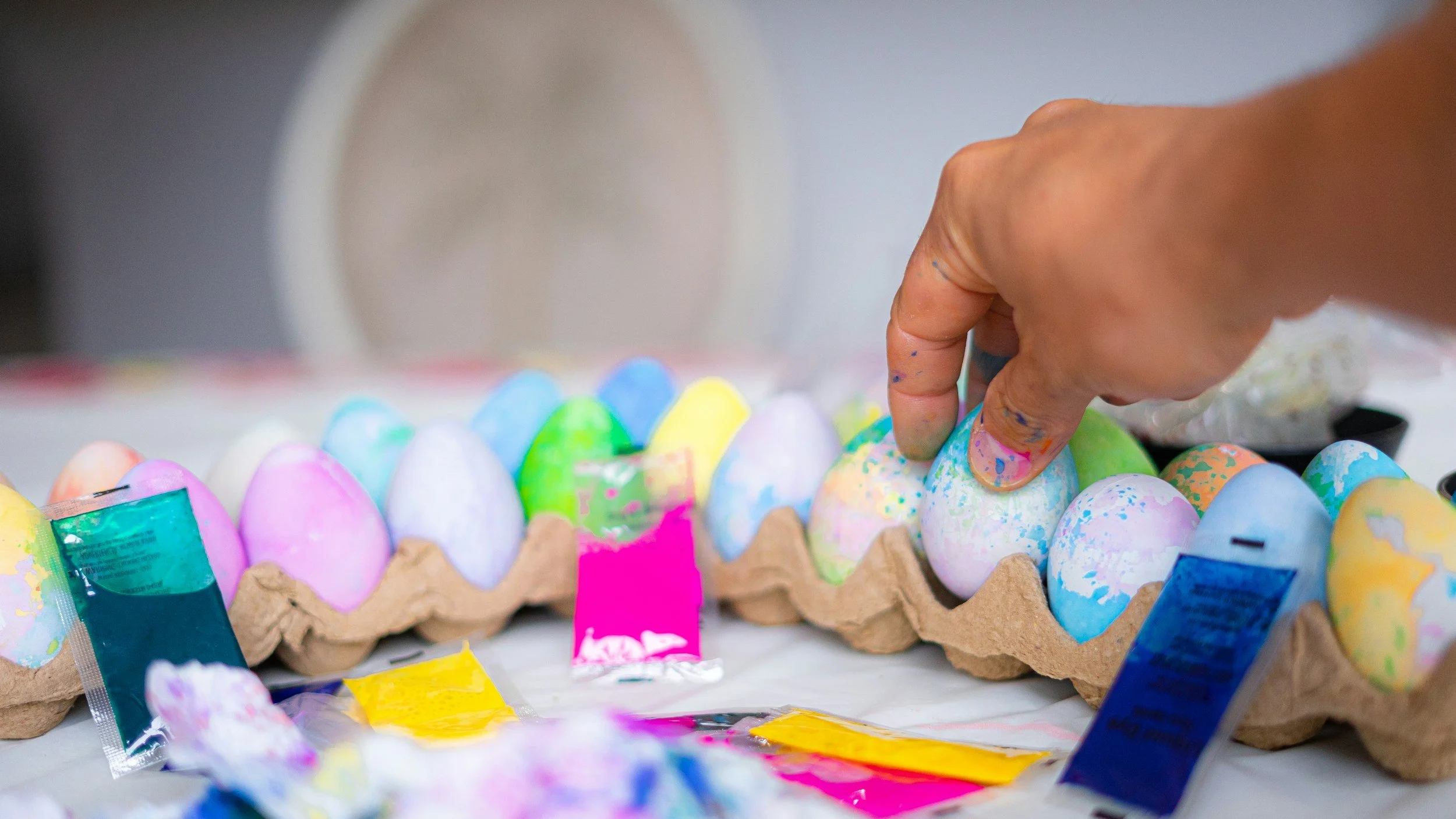
There is something about Easter in New Zealand that naturally lends itself to creativity.
Perhaps it is the timing. Unlike the bright, blooming version of Easter often seen in the Northern Hemisphere, Easter here arrives with the soft shift of autumn. The light changes. The mornings cool. Summer’s intensity eases. Gardens begin to look different. The pace, for many people, becomes just a little less frantic. It is a season that seems to invite making.
That may be why Easter has long held a quiet place in New Zealand’s creative life — not always in grand or formal ways, but in the kinds of small acts of making that still shape how people mark the season. Decorations on the table. Seasonal baking wrapped up to give away. Handmade cards. Children painting, gluing, colouring, cutting and scattering craft supplies across the house during the school holidays. Branches in a vase. Soft natural tones. Baskets, eggs, rabbits, florals and the familiar visual language of Easter reappearing each year in slightly different forms.
Not all art begins in a gallery.
In fact, Easter is one of those occasions that tends to blur the line between art, craft, tradition and home life. It is less about perfection than atmosphere. More about gesture than performance. A hand-painted egg, a carefully styled table, a homemade wreath, a seasonal arrangement, a baked gift or even a child’s slightly chaotic Easter masterpiece on the fridge all belong to the same broader creative instinct: the desire to mark a moment of the year in a visible, tangible way.
That instinct remains deeply familiar in New Zealand.
There is a practical creativity to life here that often goes underappreciated. New Zealanders have long had a habit of making do, making things, adapting materials, styling spaces and adding a handmade touch where they can. Easter sits neatly within that tradition. It is a time when homes often become just a little more intentional, whether through food, flowers, seasonal colour or small decorative details that help create a sense of occasion.
The visual language of Easter also suits New Zealand’s autumn particularly well. Rather than the icy pastels and tulip-heavy imagery that dominate overseas Easter styling, there is room here for something a little warmer and earthier. Soft greens, muted golds, rust tones, creams, natural fibres, timber, ceramics, dried textures and handmade pieces often feel more at home in a New Zealand setting. There is something appealing about an Easter aesthetic that sits more comfortably alongside turning leaves, cooler evenings and the changing season than against imported ideas of spring.
This may be one reason why Easter creativity in New Zealand often feels less formal and more personal. It does not need to be elaborate to feel thoughtful. A simple arrangement on the table, a few seasonal details around the home, or a small creative activity shared with children can be enough to make the long weekend feel distinct from the rest of the year.
For many families, this becomes especially relevant during the school holidays. Easter often arrives with children at home, and with that comes the annual search for things to make, paint, build, bake or decorate. This is not a trivial part of the season. It is often where Easter becomes most memorable. Children do not usually remember whether a table setting was elegant or a dessert was perfectly styled. They remember making things. They remember mess. They remember colour. They remember the feeling that the weekend was different.
And perhaps adults do too.
There is also something quietly restorative about seasonal creativity in general. Much of modern life is screen-based, rushed and relentlessly functional. Easter offers a small counterpoint to that. It invites people to do things with their hands again — to arrange, create, bake, wrap, decorate or make simply because it is enjoyable to do so. Not productive. Not optimised. Just human.
That may be part of why Easter creativity still holds its place, even in a culture that often insists it is too busy for such things.
In the end, the art of Easter in New Zealand is not necessarily found in any one object. It is found in the atmosphere people create around the season. In the colours chosen. In the food prepared. In the decorations brought out. In the crafts made at the kitchen table. In the small acts of effort that make the long weekend feel warm, welcoming and a little set apart from ordinary life.
And perhaps that is what art has always done best.
Not merely decorate a moment — but help us notice that it matters.
A few Easter craft ideas to try this long weekend
If this has you feeling inspired, Easter can also be a lovely excuse to make something — whether that’s a quiet creative project for yourself or a simple activity to keep little hands busy over the school holidays.
For adults
Natural Easter wreath
A beautiful option for the front door or dining table using branches, dried flowers, ribbon and seasonal textures.
Learn more
Hand-painted or dyed decorative eggs
A simple but effective project that works beautifully as table styling or Easter décor. Think earthy tones, botanical prints, or a more refined modern look.
Learn more
For kids
Paper Easter bunny masks or crowns
An easy craft that is fun to make and then actually play with afterwards.
Learn more
Easter egg basket craft
A classic school-holiday activity that doubles as something useful for egg hunts or Easter treats.
Link: [Add your link here]
For either
DIY Easter table decorations
A nice middle-ground project if you want something simple but still creative — ideal for families or anyone wanting to make the weekend feel a little more special.
Learn more
Whether it is a wreath on the door, painted eggs on the table, or glitter and paper ears spread across the kitchen bench, these are often the things that give Easter its character. Not perfect, perhaps — but memorable.