
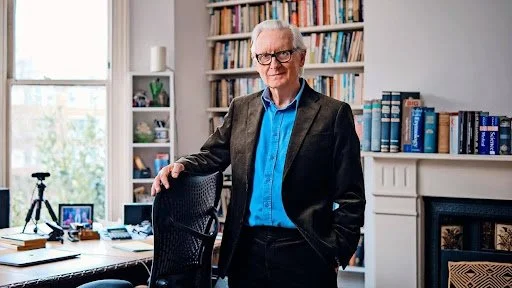
Peter Thornton, 78, the former chief coroner for England and Wales, and his new book on organising life in the later years
Let’s talk about death, and the last years of our lives. I know it’s hard; most of us want to ignore the subject. We might joke about where to scatter our ashes or who will get the All-Black Jersey, but the technical stuff seems too depressing and dreary. Most of us would prefer to clean the dunny than talk about pensions and wills. Although 25 per cent of people think about their demise once a week, fewer than half have ever done much about it, except try to delay the day with a few squats and lunges.
Approximately 20% of New Zealand’s population is aged 65 and over as of 2024, with the number of seniors projected to reach 1 million by 2028, representing 1 in 5 people. The proportion of older adults is rising, with Stats NZ anticipating this demographic will reach 1.9 million (over 28%) of the population by 2073.
Most don’t plan or save for their funerals, but a wake, like a wedding, needs planning. According to Hospice, 80 per cent of people said they had never discussed their later years with family. Half of all couples haven’t even asked their partner about their end-of-life wishes, and fewer than 33 per cent of adults have written any kind of will.
But we all need to do a bit of death cleaning, as the Swedish call it, not just sorting out old gym bags, but thinking how we want to spend what could be the last third of our lives. Your families will appreciate it
Peter Thornton, a human rights barrister, Old Bailey judge and the first chief coroner of England and Wales, has seen a lot of gruesome, tragic ends, but he’s a deeply practical man. Instead of recoiling when surrounded by death, he started compiling lists of what everyone needed to do before their exit.
“Final years sounds too brutal, but it’s about those last few decades,” he says.
His friends soon asked him to share his advice. Overwhelmed by requests from bereaved partners, he first wrote a single page of notes with a few points for old age and essential early steps for those left behind, from obtaining the medical certificate of cause of death from the hospital or GP to informing government departments (pension, benefits, tax, driving licence etc). Those overwhelmed by grief, he explains, wanted something simple. Now he has written a book to nudge people to put their affairs in order earlier. He says:
“This book is for my generation — I’m 78 — and for those who worry about their older relatives.” Boomers and Gen X listen up. “It’s the sort of thing you put off because it’s a bit tedious and technical,” he says. “Couples tend to have one who is more efficient” — he won’t say whether that is him or his wife, who is a solicitor — “but we all need to do a bit.”
His book is deeply practical. “My in-laws lived to 98 so it was a learning process, it was about working out how to look after yourself for as long as possible, adapt your home, keep exercising, then gradually choose carers or maybe a care home. But it’s also about sorting out the paperwork and financial affairs, bank accounts, insurance, standing orders and the will.”
The will, he says, is vital. “It can be simple. People tend to shy away from chatting about it to their family, but they should know your wishes. You don’t think about unexpected death, but as chief coroner, I did. It used to be called ‘sudden death’. That was taken out because all deaths are sudden, but you can have a surprising death, maybe a heart attack, rather than an expected one or a slow one like Alzheimer’s, which might take its time.”
The book would be a good Christmas present, he suggests, if your family isn’t squeamish. “If you put your affairs in order and leave a list of requests, it’s a way of having a voice when you become incapable or die. You can say how you would like your health issues treated, and your finances arranged at the end. If you find yourself incapacitated, maybe after a stroke, it’s what sort of tea you like perhaps, or at the end whether you want a priest. It should give you comfort. Then get your superannuation, pensions and net worth together. Finally, write or record a short memoir about your history to help the next generation who might one day want to know.”
Thornton suggests creating an “On Death” file with all these basic details. “Mine needs updating,” he says. “I have a copy of my will, my birth certificate, marriage certificate, doctor details, bank and insurance companies, computer and phone passwords, medical wishes, life story and preferences. Then tell your family where it is. If we love them, we should try to help them a little bit when they are perhaps feeling overwhelmed by your death and at their most vulnerable.”
Most of it is a choice, he says. “But you must write a will or there will be chaos. You may own a home, the difference between being married or not can be huge, particularly if there are children. There are strong financial as well as emotional reasons for tying the knot. You can’t stop people challenging wills when there are multiple, complicated marriages, but it makes it doubly important to sort out your wishes before you go.”
Older age, he says, can be a blessing. “The over-65s are the happiest. They are less anxious and have a greater sense of self-worth, but they need to keep their independence for as long as possible, stay active, continue working a bit part-time, manage their own accounts, stay engaged and social, have hobbies, send emails to friends. I play my guitar, I’m picking up German and I work. I have six part-time jobs.”
His son and daughter don’t have children but many in their eighties, he says, might have grandchildren. “It can be tiring and stressful to look after them, but the voluntary care sector is vital now. They just need to take breaks and pace themselves.”
He doesn’t suggest the elderly should downsize. “We should probably move on when the kids have gone, but we tend to be deeply attached to family homes and love where we live, the neighbours, friends, shops. So, instead, think of how to adapt your home or share it. When it all gets too much, you should already have thought about care homes or getting together in sheltered accommodation with like-minded people.”
Health-wise, he doesn’t want to lecture, although he has seen the effect of drugs and drink in autopsies. “You can take anything up at any time and it will have some benefit, walking, in particular. Eating-wise everyone knows now how to eat carefully; it’s just having the willpower. Drink too — you need days off, all in moderation.”
He does worry that people assume they can’t do much to improve their later years, when they become frail. “It’s worth keeping your body in a good shape but there aren’t any magic solutions, we worry too much about what we look like rather than feel like and we need to ensure we stay positive.”
It’s the last few months that frighten people most, at whatever age, particularly if they are suffering from a painful condition or disease.
Like me, Thornton is a fan of dostadning — the Swedish concept of death-cleaning, or tidying up your clutter before you die, is seen as joyful and life affirming. “I’ve done a bit already, otherwise the next generation will have to spend a lot of time going to charity shops, auction houses and tips,” he says. “It’s hard to give up things you cherish, but you need to refine everything, or your relatives won’t know what mattered most to you. I like to buy books but I am going to have a cull of 20th-century paperbacks. The paintings, however, are trickier.”
His funeral is still a vague work in progress. “But I do want a cremation. It’s best to say what you’d like. I haven’t yet worked out where I want my ashes scattered, it can be pretty messy and there are a lot of them.” You don’t have to do any of these things, he reassures me. “You can just say, it will be what it will be, but that should be an active choice, your wish. You might even find it strangely satisfying putting everything in order.”
But do it while you have the energy, he says. “The first five years of your seventies are a good time before you slow down and after you’ve given up many of your commitments. Three quarters of those aged 75-plus have at least two long-term medical conditions. I don’t like the phrase comorbidities. But stuff can happen to any of us at any time, so just do it when you have a spare moment.”
He doesn’t like the word boomer, either. “I’m a lucky postwar bulge baby.” But he doesn’t feel guilty about Gen Z struggling to pay for their university tuition and exorbitant rents. “I feel sympathetic, they are constantly battling, but they have the ingenuity to change stuff.”
He wouldn’t mind being the old people’s tsar. “I’d have no objection, but I wouldn’t want to do it on my own.” What he’d like is to draw up a charter of rights for older people. “I don’t want us thought of as a group, but we need to protect against poverty, reform the care system, encourage the elderly to have a more active and social life, avoid digital exclusion and stay positive and optimistic.” Learning how to live well takes skill, time and effort, but so too does knowing how to depart.
You can buy the good Doctor’s book from Paper Plus for $35.00.